Optimist Family

“Wagwan?”

I turned my head to see a man walking out of the sailing school and down towards the dock where I was hefting a load of groceries back to my dinghy. My favorite place to tie up in Falmouth was the pier right next to the local sailing academy because it was sheltered from big boat traffic and out of the way. Antiguan dialect is strong and beautiful and I pieced more of it together every day. The man looked at me enquiringly. I repeated the word in my head a few times: wagwan… wagwan.. Oh! What’s going on!
“Not much”, I replied. “How are you?” Luckily I had guessed right and we started chatting about sailing and boats. He introduced himself as Rhone and told me that he was one of the instructors at the sailing school.

“I’m super jealous” I said, eyeing the zippy little lasers scooting around on the wind. “I so miss dinghy sailing.”
“Want to come out? I can take you tomorrow after work.”

I hastily agreed, and we made plans to meet at the dinghy dock the next afternoon. Thus started a great friendship between myself and about six or seven of the sailors associated with the academy. I hung out in the chase boat with them while they trained the little Optimist sailors in racing. They took me wakeboarding in the evenings. I hung around with the little boys and watched the fishermen casting nets for bait. The instructors let me sail the lasers and drive the case boat. It was like having a little island family.
An air of excitement hung around the sailing school, and after a few days I discovered why. The whole sailing dinghy crowd in Falmouth was getting ready for Opti Worlds, which they were hosting at the beginning of July. For those of you who are unfamiliar, Optis are tiny pram-shaped boats that are perfect for kids up to the age of fifteen. They’re great for beginner sailors because they can be capsized and righted easily, and bashed into each other without sustaining too much damage. What I didn’t know was that Optis are a world-class dinghy. The world competition this year includes sailors from more that fourty different countries, and takes place over a mile offshore. These must be some pretty gnarly kids, I thought.

Optimists Sailing
Photo from sailingdata.com

My new friends invited me to stay and volunteer to help run the races, but I had to keep moving. Hurricane season is approaching, and there are still a bunch of islands I want to work my way through. It was with a heavy heart that I said goodbye to Falmouth and my sailing family, and headed back to sea.


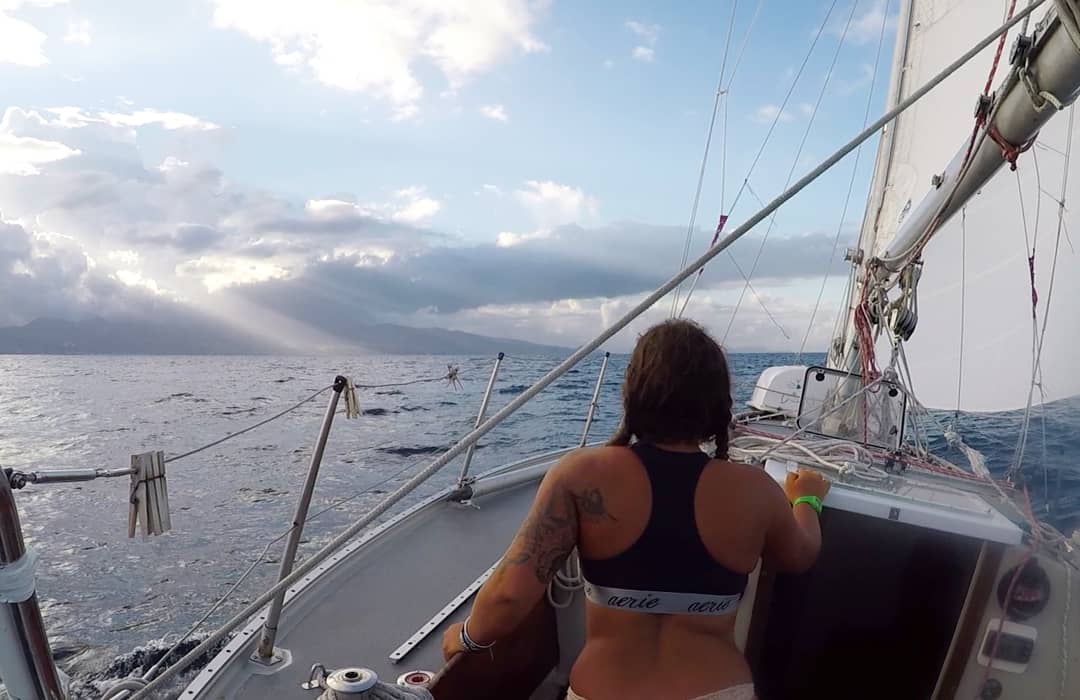
The passage to Martinique took two days and two nights. I was skipping Guadeloupe and Dominica to head right for Martinique to do some boat repairs. I planned on looping back up to explore at least Dominica before I headed south again. Since the islands are so close together, I don’t really see a problem with doing them out of order.

The first night of the passage was squally and dark, and I was up and down constantly to drop my headsail for each burst of wind. Between squalls, the wind was a friendly 10-15 knots, and I had my big headsail up. The short bursts of wind that came with the squalls would have easily overpowered my large genoa, so I made a routine of running forward and dropping it before each gust hit. The squalls were usually accompanied by about 10 minutes of fierce downpour before the whole thing blew away and the night was mine again. Seeing squalls on a moonless night is tricky. By the time I felt the boat starting to significantly heel over, it was too late, so I had to be extra vigilant. It was imperative that I spot each squall before it hit me, but I was also trying to get some sleep. I woke up every 20 minutes to scan the horizon, and started noticing that where the squalls lay, the black night was slightly blacker than anywhere else. It was mostly overcast, so I couldn’t use lack of stars for a guide. Once a squall was spotted lurking upwind, the fun part began. I didn’t want to reduce sail too soon, or I’d be bobbing around uselessly- sometimes for up to half an hour. If I waited too long, I’d get a thorough soaking, and wrestling down the genoa would be about ten times harder. The key was to wait until the first tendrils of the squall wrapped their little fingers around the sails and tapped Gecko over a hair. Then I’d spring up and rush about, dropping the headsail, checking the course, and running below for cover.

This made for an aerobic night, and by morning I was exhausted. The sailing was beautiful all day, but with the night came more tricks of the wind. Right about midnight, I was rounding the north coast of Martinique when the wind completely died. I knew about the wind shadows to the west of the islands, and had accordingly kept to the east on my sail down. Unfortunately, my destination was halfway down the west coast of Martinique. I was only a few miles offshore, and totally exhausted. I secured the sails, and tried to catch some sleep while Gecko bobbed around in circles. However, I was too nervous to sleep for more than about 10 minutes at a time. Being so close to shore without knowing the currents had me worried that I’d get pushed up onto the rocks. When the sun rose, I fired up the old engine, and motored on.
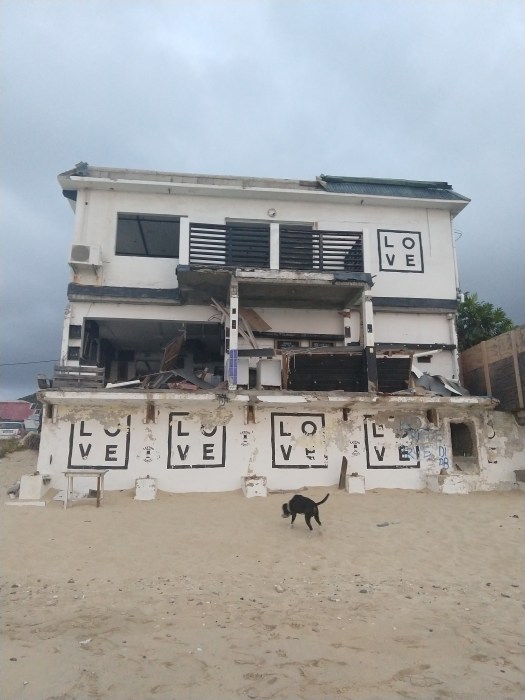
Three miles out from Fort-de-France, a huge squall overtook me. For two hours, I was bombarded by whiteout rain, and swirly winds which made it almost impossible to make forward way. Finally, wet and cold, I dropped hook in the Fort-de-France anchorage. It was Ascension day, and the whole island was closed for the holiday. Since I couldn’t clear in, I made a cup of tea and laid down for a delicious nap.
Croissants and Wine

The anchorage in St. Martin smelled like cigarettes and cologne. I arrived with the sunset, running into the anchorage at 6 knots on a stiff breeze. I wanted to drop the hook before the sun set, and right as I finished coiling the last line, darkness closed in. I was anchored in Marigot Bay, which is one of the main ports of entry into the St. Martin.

Marigot Bay

The next morning, Q-flag fluttering from the spreaders, I rowed into the dock to go clear in. Clearing in could be accomplished somewhere called Island Waterworld. This sounded hilariously like knock-off of Disneyworld, and I pictured my passport being stamped by a weird French Snow White. Disappointingly, Island Waterworld turned out to be a marine hardware store. There was a computer in the back where mariners were to put in their boat and passport information. When the little printer above the computer spit out the completed form, the hardware store clerk stamped and initialed it. I was cleared in!

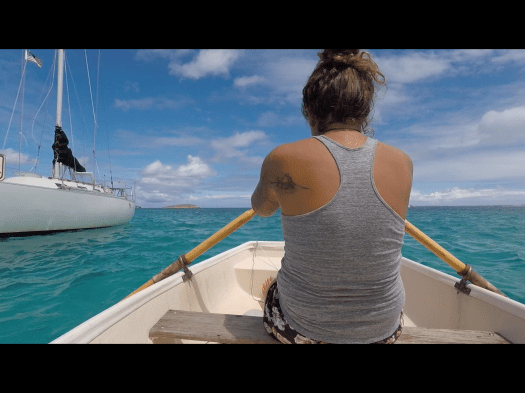
The long row in to shore

Marigot Bay is a large, crowded anchorage. I dropped hook at the very outer edge of the field of boats. This meant that I had over a half-mile row to get in to shore, but it was worth it for the breeze and the privacy. A huge sense of relief settled upon me on arrival. I had finally finished the worst of the easting, and I was getting further away from the more developed North Caribbean. The distinct French flavor of St. Martin was exciting. The cheese and pastries were amazing, the wine was cheap and delicious.

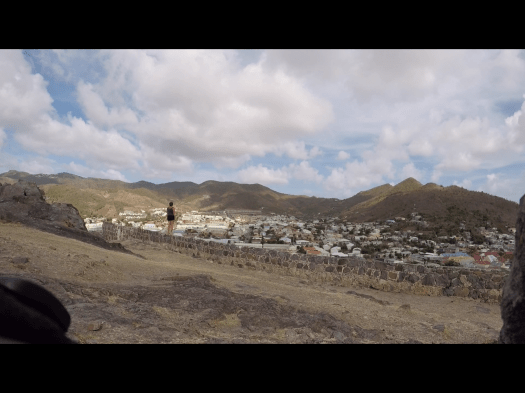
View from the fort

I made friends with a young woman who had boat-hitchiked across the Atlantic from the Canary Islands. She was currently working on a big yacht to save money so that she could keep sailing around the Caribbean. Paula showed me around Marigot and introduced me to her giant friend group. Because of this, I stayed in St. Martin almost a week longer than I had originally anticipated. The pressing need to push quickly through the islands was fading. I was finally relaxing into the salty stupor of an untethered sailor.

Paula and the captain of her yacht

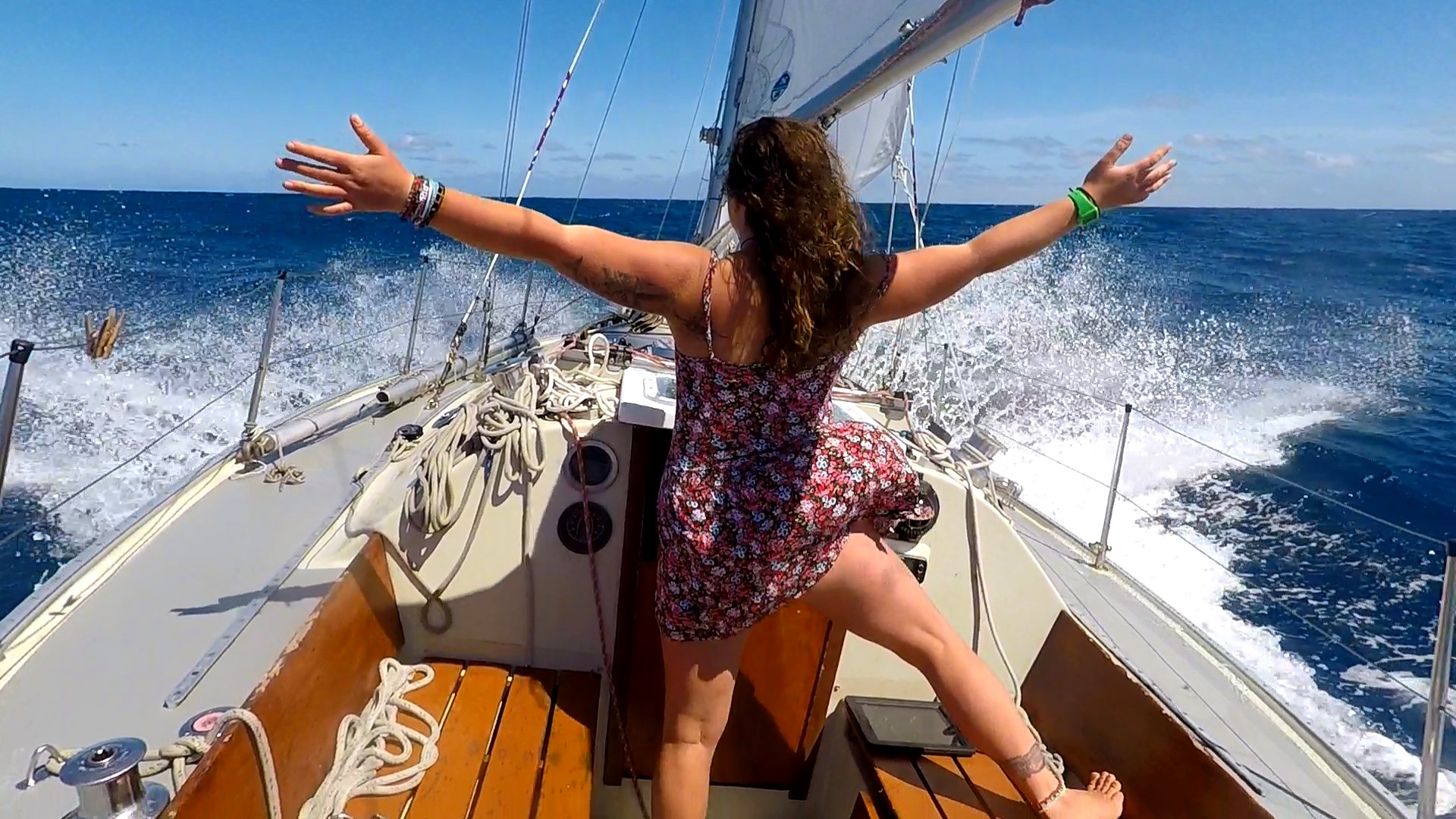
Finally, there was no putting off departure any longer. I bid farewell to my friends and set sail for Antigua. The sail took two days and a night and was the best passage I’ve had to date. A soft breeze filled my headsail, and the gentle waves swelled demurely under Gecko. There was no headlong crashing into breakers, no rail in the water. Instead, the shy stars poked their heads out on a cool night breeze as the smooth black water slipped under my keel.

While underway, I figured out how to rig up a sunshade using my old (and super cool) Whinnie the Pooh blanket. Lying in the shade in the cockpit, listening to Harry Potter on audio book, and watching the sun twinkling on the waves, I melted into a happy puddle of bliss. Perhaps this was the mass appeal of sailing, I mused. It certainly was relaxing.

The afternoon slunk in on day two, just as I saw Antigua raise her shoulders out of the sea. Realizing I wasn’t going to make it in before the customs office closed, I changed course slightly. Next to the capitol city of St. John’s lies a small anchorage. Spending the night in the busy commercial port held no appeal. Instead, Geck nosed her way into Deep Water Bay and I dropped the hook for the night. I’d deal with civilization tomorrow.


Home (freezing cold) Home

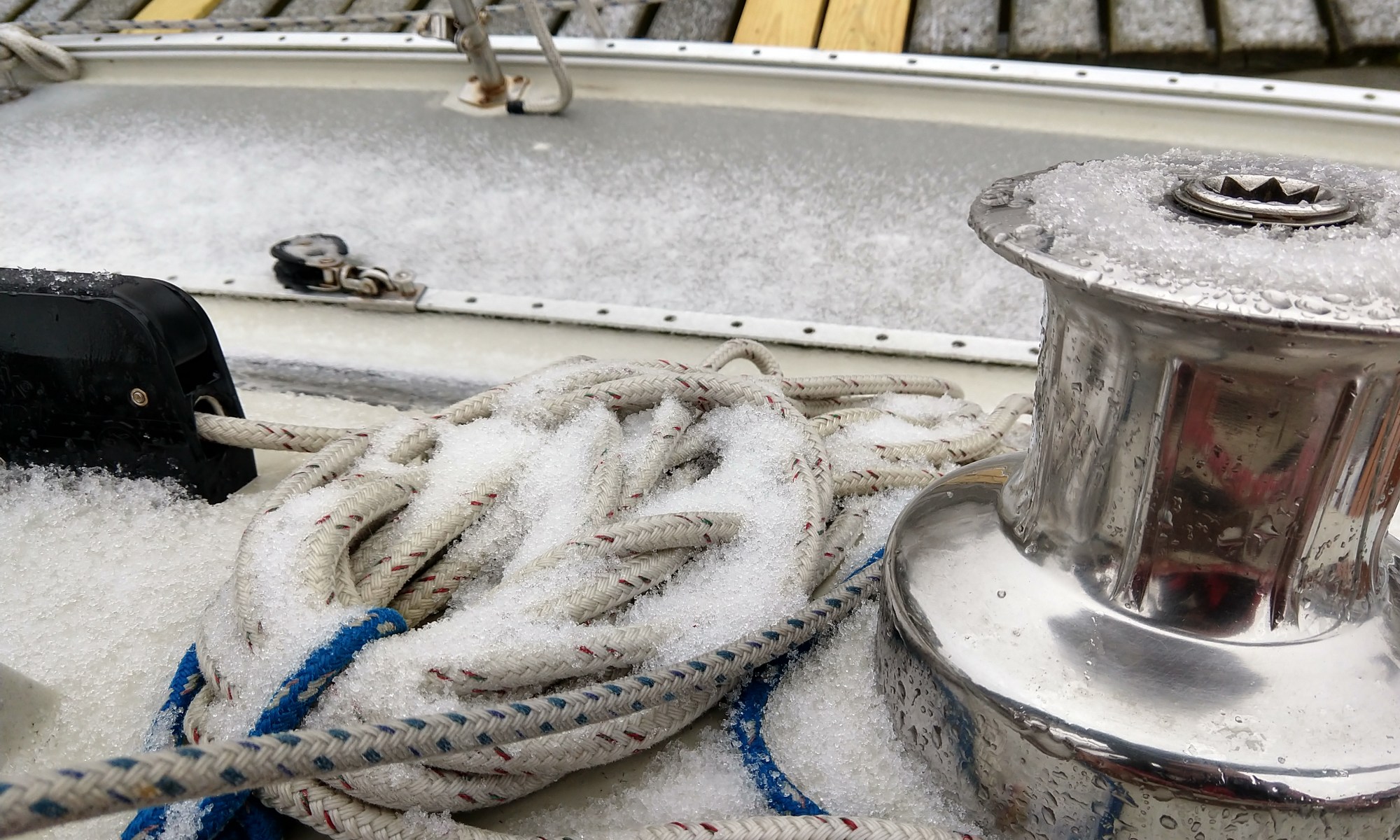
March 2nd was 38 degrees Fahrenheit and blowing. The airport had lost my bag, so I made my way to Gecko with just a backpack and a down jacket clutched around me. My mom was visiting for a break from the cold Maine winter, and she followed me down the dock wearing all the clothes she had packed. Luckily our friends Tim and Jennifer had loaned me a space heater, and we were soon huddle around the tiny white beast while I put the kettle on and grabbed blankets. I felt like I’d never left.

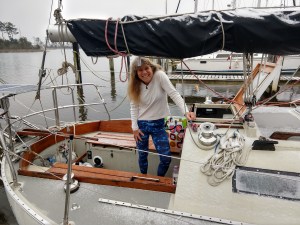
Not many moms would visit their kid on a cold, snowy, unheated boat


For my mom’s entire visit, the temperature never got above 50 (in the sun, out of the wind). She can do anything, so she never complained. When she left, her shorts sat unworn in the bottom of her bag. That was when my work began.

Day 1 of being home. Note the clean hair, nice clothes, and well-rested face. Yep, definitely day 1

My work list looked something like this:

-Working jib (get one)

– Fix stupid leaking anchor chain locker

– Sew new slugs onto main

– Sun shade (make one somehow)

– AIS receiver

– Waterproof foredeck hatch

– Get charts

My first task was acquiring a sail. My dad had loaned me his working jib for my trip down with the stipulation that I send it back to him when I arrived. I was trying to figure out how to get a used jib inexpensively when I ran into Crazy Joe and his newly purchased marine surplus store. Oriental is home to a large population of sailors, both transient and local. It also has a marine surplus store with a colorful history of owners and inventory. When I sailed in in November, it was under different ownership but I had gone in to check out their vast inventory of sails. Nothing was marked or organized, and I spend a fruitless morning sifting through jib after jib and finding nothing. When I came back in March, Joe had purchased the place and he offered me a deal: if I helped to measure and organize the sails, I could take what I needed in return. I agreed, and thus came into two beautiful new jibs.

Sail inventory at the marine salvage shop.

The other projects on my list were more straight forward. To waterproof the anchor chain locker, I first rebedded the hawseholes themselves. There was a tired gasket under each one, and the screw freely turned in the deck. I realized that most of the water that had been getting in was probably washing between the ports and the deck. This might have accounted for much of the large volume of water I’d been pumping out.

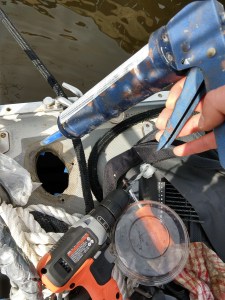
Re-bedding the anchor chain ports

I entirely sealed up the starboard anchor chain port. The ports themselves are too big for the boat and are an enormous hole to have right in the front of your boat. I figured with half the hole volume, I’d get half the volume of water. I then bought an inspection port and installed it into the door of the chain locker. I used putty and boatlife caulk and sealed the door in place. That done, I decided to see how the locker did at sea before I drilled a drainage hole in the bottom. It’s always better to wait before you drill holes in your hull. Perhaps the water coming in will be insignificant enough that I can get it out with a pump occasionally and not worry about flooding the compartment.

Waterproofing the anchor chain locker. It’s so nice to work from bed

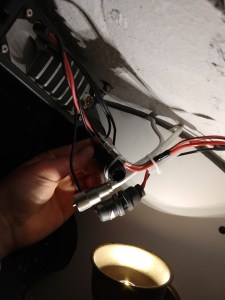
I’ve decided I would like an ais receiver for passages. If I can set a guard alarm for ships, I’ll be able to get better sleep offshore, and I’ll be able to hail them at night if I’m unsure of their course. I looked into several options, including a receiver with a wifi antennae that I could pick up on my iPad. However I soon realized that the cheapest option would be to buy a new vhf that came equipped with an ais receiver. That way I wouldn’t have to install a new antennae, run new wires, or spend a surprisingly large sum of money on the string of electronics I’d need to make the luxury of wifi work.

Wiring in my new VHF with AIS capabilities!

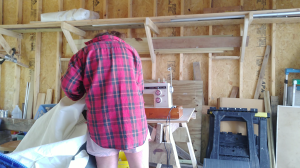
For a sunshade, I found an old sail and cut it to make it fit over my cockpit. I sewed a slit with velcro to fit around the toppinglift, and then lashed the ends to the mast and shrouds. My only complaint is that it’s a bit bulky, but it’ll be great for catching rain water and withstanding heavier winds without tearing.

Sewing my new canopy from an old sail

I’m hoping to leave Oriental in the next few days! I still have a few projects to get done before I go, but I’m almost there. I’m so excited to get going!

Oriental and Away

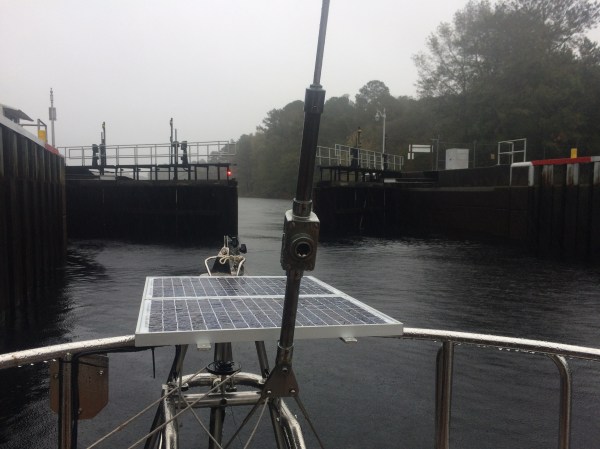
My last two weeks run to Oriental were blissful compared to the cold windy slog I made from Maine to Virginia. I ducked into the intracoastal waterway after Portsmouth and motored through the Dismal Swamp. In order to make it between two of the locks at either end, I had to crank up Geck’s little engine to 5 knots, the fastest it’s ever gone.

My first lock! It was pouring rain, but I enjoyed every minute of it!

This was the absolute slowest I could go between the locks and make the next timed opening. To accomplish it, I had Geck’s 10-horse at full throttle. Funny smells wafted out of the cabin as all the carbon burned out of the twists in the engine piping. Luckily there was no wind or current against me, and I obsessively checked engine temp and the sea strainer to make sure I wasn’t going to overheat. I barely made the second lock, and then breathed a sigh in relief as a throttled back to a happy 3.5 knots.

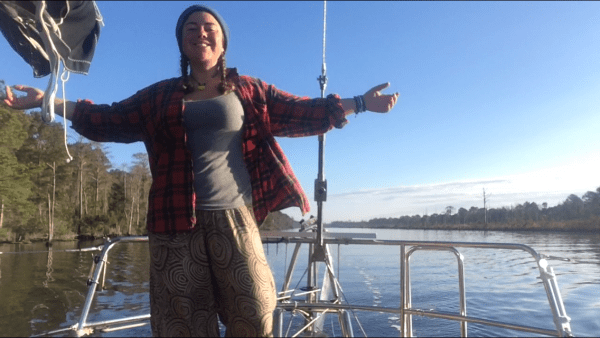
First sunny day in the intracoastal. I’m down to only one layer of clothing!

I sailed down the Alligator river and anchored at one of the bends in the bottom that night. When I arrived well after dark, I saw the anchor lights of at least 10 other boats scattered throughout the two large bends that served as a protected anchorage. I had finally caught up with a fleet! The next morning I woke up with the sun and left before anyone else. Since there was no wind and I was motoring again, I was slowly passed by every boat within the first few hours. They all waved cheerily, and I felt as though I was really getting somewhere (except for the part where everyone else was getting there faster. Wherever THERE was).

Dewey mornings south of Alligator River

I actually allowed myself to take a weather day in Belhaven (it was raining). I was ahead of schedule at that point, and I realized that I didn’t have to stand in the pouring rain all day if I didn’t want to. So I stayed below and made cookies, only venturing out for a walk during a lull in the weather. I even went for a swim in the disgusting brown water when the sun came out later.

Downwind run to make an anchorage before dark. Spoiler: I made it two hours after dark

After spending two nights in Belhaven, I sailed an easy 30-mile day and ended up anchored out in a small deserted bay halfway to Oriental. That night was the first time it was warm enough to sit in the cockpit and watch the sun set. I brought out a book and my down jacket, and felt an immense happiness settle over me. The night was whisper calm with a full moon. The water was glowing in the starlight, and I did a crazy moon dance around the deck, whooping and singing loudly at the empty night. At least I think it was empty. If anyone was trying to sleep near Bonner Bay on November 20th, I’m accepting tips for the show.

My first sunset in the cockpit of the trip

I arrived in Oriental on Novermber 21st, the day before Thanksgiving. My initial plan was to make my way into Whittaker Creek, where I would eventually be leaving my boat for the winter. However, I ran aground a couple of times in the channel so I gave up and went around to anchor by the bridge. I later found out that you have to stick close enough to the reds that you can high-five each one as you pass it. If it’s still looking sketchy, you can go outside them. And if you still can’t get in, wait for the wind direction to change and it’ll blow more water into the creek.

Almost to Oriental and finally not wearing pants

I spend a lovely Thanksgiving in Oriental with some old family friends, and then successfully (this time) made my way into a slip at Whittaker Creek Marina. Nine days after arriving in Oriental, I said goodbye to Gecko and got on a plane to fly back down to work. While it wasn’t the most relaxing sail, I had pushed Gecko hard and fast and made it from Maine to Oriental in 25 days. The only times I used my engine were for stretches of the intracoastal, and the occasional push if the wind died. The average wind speed I experienced was 20-25 knots, with temperatures averaging in the high thirties. Leaving the Geck to return to work was much harder than I’d anticipated. I had another work list of projects that had to be completed before I left for the Caribbean, but I hadn’t had time to start any before I took off. I patted Gecko on her stupid leaky bow and told her that I’d be back soon.

Back in Punta Arenas in the canopy of a tree